

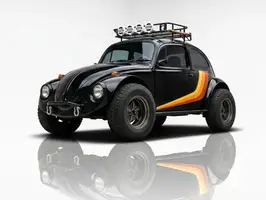


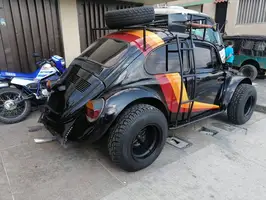
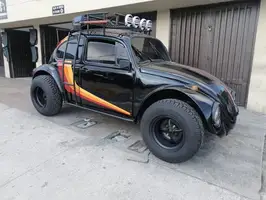
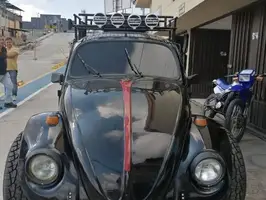
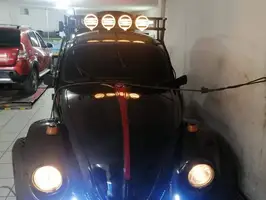
Performance Specifications

MPG
None city / None hwy

Drivetrain
RWD

Fuel Type
GAS

Exterior Color
BLACK

Interior
UNKNOWN

Seating
None

Engine
UNKNOWN

Transmission
AUTOMATIC
Value Compass™
Vendo Volkswagen escarabajo modelo 66. Placa de Manizales, papeles nuevos impuestos al día, traspaso inmediato
Vehicle History



Overview
volkswagen escarabajo 1966 baja — what you’re really driving
A 1966 Volkswagen Beetle 1966 turned into a Baja is not a clean restoration. It’s a cut-up car built to survive rough roads. Fenders trimmed, engine exposed, suspension pushed beyond what the factory intended.
Stock, a ’66 Beetle came with a 1300cc engine making about 50 horsepower. Most Baja builds don’t keep that. They swap engines, raise the suspension, and strip weight. Done right, it becomes usable off-road and tolerable on the street. Done wrong, it’s loud, unstable, and unreliable.
what makes a baja different from a stock bug
The body is cut. Front and rear aprons removed. Fiberglass panels replace steel. That reduces weight and improves approach and departure angles.
Suspension gets lifted. Front beam adjusters or lifted spindles. Rear torsion bars re-indexed. Some builds add longer trailing arms. Ground clearance increases from about 6 inches to 10–12 inches depending on setup.
Tires change everything. A Baja usually runs 28–30 inch off-road tires. That affects gearing, acceleration, and braking. Stock gearing struggles with that tire size unless corrected.
The engine is exposed. No sealed engine bay. Cooling depends on airflow and proper tin. Missing tin leads to overheating fast.
how it actually drives on the street
It’s worse than a stock Beetle in most cases.
Bigger tires slow acceleration. A stock 1300cc engine with 30-inch tires feels dead. You’re not merging safely. You’re waiting for gaps.
Steering gets vague with lifted geometry. The front end is light already. Lift it and you lose more feel.
Braking distance increases. Larger tires require more force to stop. Stock drums don’t keep up.
Noise is constant. No insulation. Engine exposed. Wind and tire noise dominate.
It’s not refined. It’s functional.
where a baja is better than a stock beetle
Off-road, it’s a different machine.
The rear-engine layout puts weight over the drive wheels. Traction is strong in sand and loose dirt. A stock Beetle already does this well. A Baja improves it with clearance and tire choice.
The car is light. Around 1,600–1,800 lbs depending on build. That means less sinking in soft terrain.
Simple suspension works. No complex joints to fail. You can fix most issues with basic tools.
In Baja California races during the late 1960s and 70s, modified Beetles ran long distances with minimal support. That’s where the Baja concept came from. It wasn’t theory. It was survival.
can a 1966 baja replace a modern car
Not without heavy modification.
Stock Baja builds are worse daily drivers than stock Beetles. Louder, less stable, less predictable under braking.
To function in modern traffic, you need:
- more power to offset tire size
- better brakes to control that mass
- corrected suspension geometry
- reliable electrical system
Without that, it’s a weekend car, not transportation.
engine setups that actually work
A 1776cc engine is the minimum for a street-driven Baja. Around 75–90 horsepower. Enough to move larger tires without struggling.
A 1915cc or 2110cc build is more realistic if you plan to drive highways. 100–140 horsepower. Now it keeps pace with traffic.
Cooling matters more in a Baja. The engine is exposed, but that doesn’t mean it runs cooler. Missing tin, bad sealing, or poor carb tuning will overheat it fast.
Parts usually come from CB Performance or EMPI. Quality varies. Cheap cylinder heads crack. Cheap carbs go out of sync.
suspension and drivetrain changes that fix real problems
Longer rear trailing arms increase wheel travel. That helps off-road but stresses CV joints and axles. Stock swing axle setups limit travel and create camber issues.
Serious builds convert to IRS. That removes the swing axle problem and improves stability. It requires fabrication or swapping to a later chassis.
Gear ratios need correction. Larger tires effectively raise gearing. A 4.37 ring and pinion or lower helps bring power back. Without it, the engine works harder and runs hotter.
braking upgrades that aren’t optional
Front disc brakes are the baseline. Cost sits around $500–$900.
Rear discs help, but even a front-only setup is a major improvement over drums.
With larger tires, braking force drops. That’s physics. More rotating mass, more effort required to stop.
Ignoring this is how people end up in ditches.
one real build example
A 1966 Baja built in Tucson in 2021:
- 1915cc engine: $5,200
- dual carburetors: $900
- front disc brakes: $650
- IRS conversion: $2,200
- transmission re-geared: $1,500
Total: around $10,000.
Before the build, the car struggled to move on 30-inch tires. After the build, it could cruise at 65–70 mph and handle dirt roads without losing control.
That’s the difference between a cosmetic Baja and a functional one.
weaknesses that don’t go away
Safety is still minimal. No airbags, no structural protection. Off-road capability doesn’t change that.
Weather protection is worse than stock. Open engine bay lets in dust and water.
Fuel economy drops with larger engines and tires. Expect 18–25 mpg depending on setup.
Maintenance increases. Off-road driving accelerates wear on suspension, bearings, and seals.
what you end up with
A properly built 1966 Baja can handle rough terrain and still drive on the street without feeling like it’s about to fail. That version exists, but it costs time and money.
What you don’t get is refinement or safety. You get a machine that does exactly what you build it to do, nothing more.
Common Questions About This Vehicle
Other Cars You Might Like
Vehicle Specifications
History and Inspection
- Desconocido accidents✓
- Desconocido open recalls found✓
- One owner✓
- Not stolen Not previously stolen✓
- View full Carfax report